
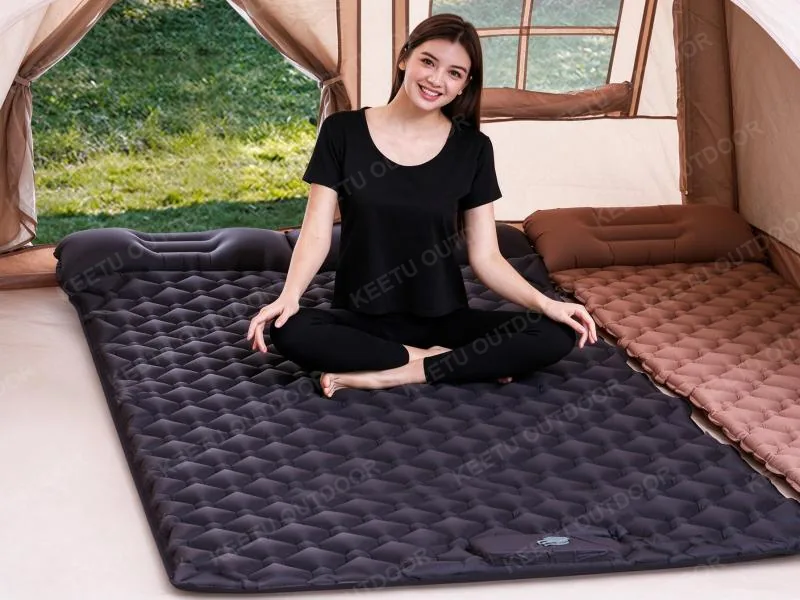
The r value sleeping pad figure is the only number on a mat that tells you how cold a night it can take, and it is not the same as thickness. A 5 cm air pad and an 8 cm air pad can differ by a full R point, while a thin foam mat can beat both. This guide explains what the number measures, how it is tested, and how much you actually need.
What the number measures
A sleeping pad r value is a measure of thermal resistance: how strongly the pad resists heat passing from your body into the ground. The higher the number, the slower that heat loss. It is the same unit used for building insulation, which is why an r-value sleeping pad can be compared with the insulation in a house wall.
The figure is not a temperature rating and it is not a thickness. It is measured rather than calculated, and the test method matters — which is where the standard comes in.
How it is tested
Since 2018 the industry has had a common test method: ASTM F3340, Standard Test Method for Thermal Resistance of Camping Mattresses Using a Guarded Hot Plate Apparatus. A hot plate sits on one side of the mat and a cold plate on the other, and sensors measure how much energy it takes to hold the hot plate at body temperature.
The value of a single method is comparability. Before it, brands quoted figures from their own in-house tests, so a 3.0 from one maker and a 3.0 from another were not necessarily the same 3.0. When a supplier cannot show an ASTM figure, treat the number as indicative rather than comparable.
R value does not convert to a temperature
This is the mistake buyers make most often. A camping mat r value cannot be turned into “this pad is good to minus five degrees”, because the ground temperature, the sleeping bag, your clothing and how much you move all change the result. What the number does is rank pads against each other.
Season bands are a planning tool, not a specification. They are useful when choosing between models and misleading when quoted as a guarantee.
R value sleeping pad chart
The table below is the working range most suppliers and retailers use. It is a planning guide, not a standard: the same pad that is comfortable at 10 °C on dry grass will feel different at 10 °C on wet ground.
| R value | Typical use | Ground conditions |
|---|---|---|
| 0 – 2 | Summer camping, indoor use, warm-weather festivals | Dry ground, mild nights |
| 2 – 4 | Spring to autumn; the most common range for general camping | Cool nights, damp grass |
| 4 – 6 | Cold-weather camping, late autumn and early spring | Frozen or snow-covered ground |
| 6 and above | Winter and alpine use, snow camping | Snow, ice, sub-zero nights |
Most mats on the market sit somewhere between 0 and 9.5. A sleeping pad r value chart like this one is enough to place a product in the right band; the exact figure on the box is what you compare between models.
Why thickness is not insulation
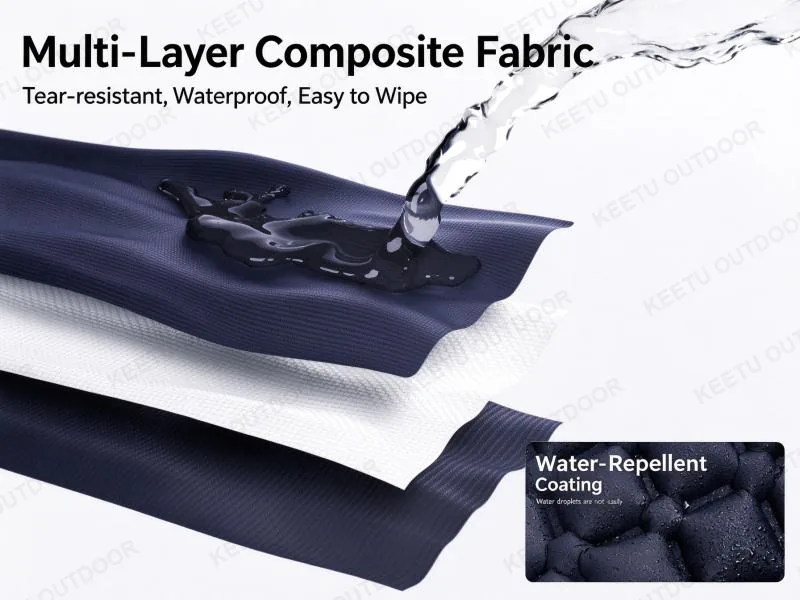
An air chamber has no insulation of its own — air moves inside it, and moving air carries heat. What raises the r value insulation sleeping pads deliver is what is inside or around that air:
- Chambers and baffles. Dividing the air into small cells limits convection. A pad with large open chambers loses heat to internal circulation; a pad with a dense pattern of cells does not.
- Foam. Open-cell foam traps air in place. This is why a 3 cm self-inflating mat can beat a 10 cm pure-air mat.
- Reflective layers. A metallised film inside bounces radiant heat back. It adds very little weight and a measurable amount of R — and it is the one case where a high-R pad can feel warm in summer.
- Face fabric. Thin 20D nylon conducts more than a heavier 40D or a brushed liner, though the effect is small next to the air chamber itself.
Stacking mats adds the numbers
Two mats under you behave like two layers of insulation: r value sleeping mats add. A 2.0 air pad on top of a 1.5 closed-cell foam mat gives you roughly 3.5, which is cheaper and lighter than buying a single 3.5 mat — and it is how a lot of cold-weather campers actually build their system.
This is also why the highest r value sleeping pad is rarely the right answer for everyone. A pad rated 8 or 9 is heavy and bulky, so it belongs in a car-camping setup rather than a backpack. A sleeping pad with highest r value is a catalogue headline, not a recommendation — the useful question is what R you need for the ground you sleep on.
The trade-off nobody quotes
R and weight pull against each other. Insulation means foam, reflective film or extra material, and every one of those adds grams. A summer mat at R 1.5 can weigh around 400 g; a winter mat at R 6 typically weighs two to three times that. When a supplier offers both, the honest way to present it is two products with two R values and two weights, not one product described as doing everything.
What we make
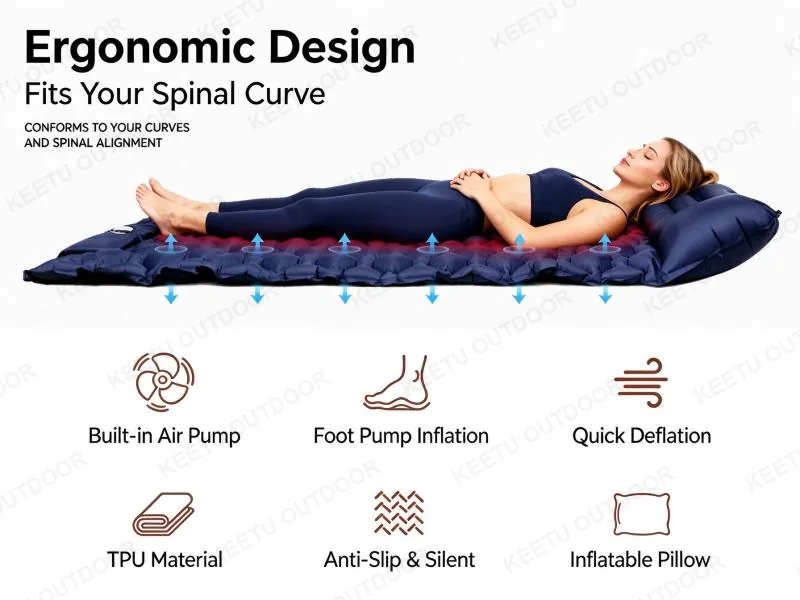
We produce inflatable sleeping pads in two insulation grades rather than one compromise: an R 2 pad for summer and warm-weather camping, and an R 3 pad for three-season use. Both are built with a built-in pump, an integrated pillow and a TPU air chamber. The full specification, sizes and colours are on the camping sleeping pad page. R value is quoted per order and per specification, and we do not publish a figure for a model we have not tested.
For trade buyers
If you are sourcing pads for a retail range, ask for the R value and the test method together. A figure without a method cannot be compared with the mats already on your shelf, and a seasonal claim (“three-season”) without an R value is marketing rather than specification. We supply importers, distributors and private-label brands; MOQ 100 pcs per model, OEM and private-label production available. See the rest of our sleeping gear range.
Not sure which R value your market needs?
Send us your target season, the ground you sell for and your price point. We will tell you which R value fits before you order.